

Understanding the old road, making room for new choices, and learning to come home to yourself.
CPTSD therapy helps people understand and address the effects of prolonged or repeated traumatic experiences, particularly when those experiences have affected their sense of safety, relationships, emotions, and identity. When looking for CPTSD therapy in Chicago, seek a trauma-informed therapist who understands complex trauma, prioritizes safety and collaboration, and helps you build the capacity to respond differently without rushing you into painful memories.
Here's something I find interesting about trauma.
Sometimes the people who have become the most skilled at managing life are the very people who struggle to feel comfortable living it.
They're responsible.
They're capable.
They're successful.
They know how to handle things.
They anticipate problems before anyone else realizes there's a problem.
And if something goes wrong, they're probably already working on a solution.
From the outside, they look fine.
Inside, they may feel exhausted, anxious, disconnected, or constantly on guard.
One of the things I hear in my work with high-achieving adults is:
“My trauma wasn't that bad.”
Often followed by:
“I don't understand why I feel this way. My life is good.”
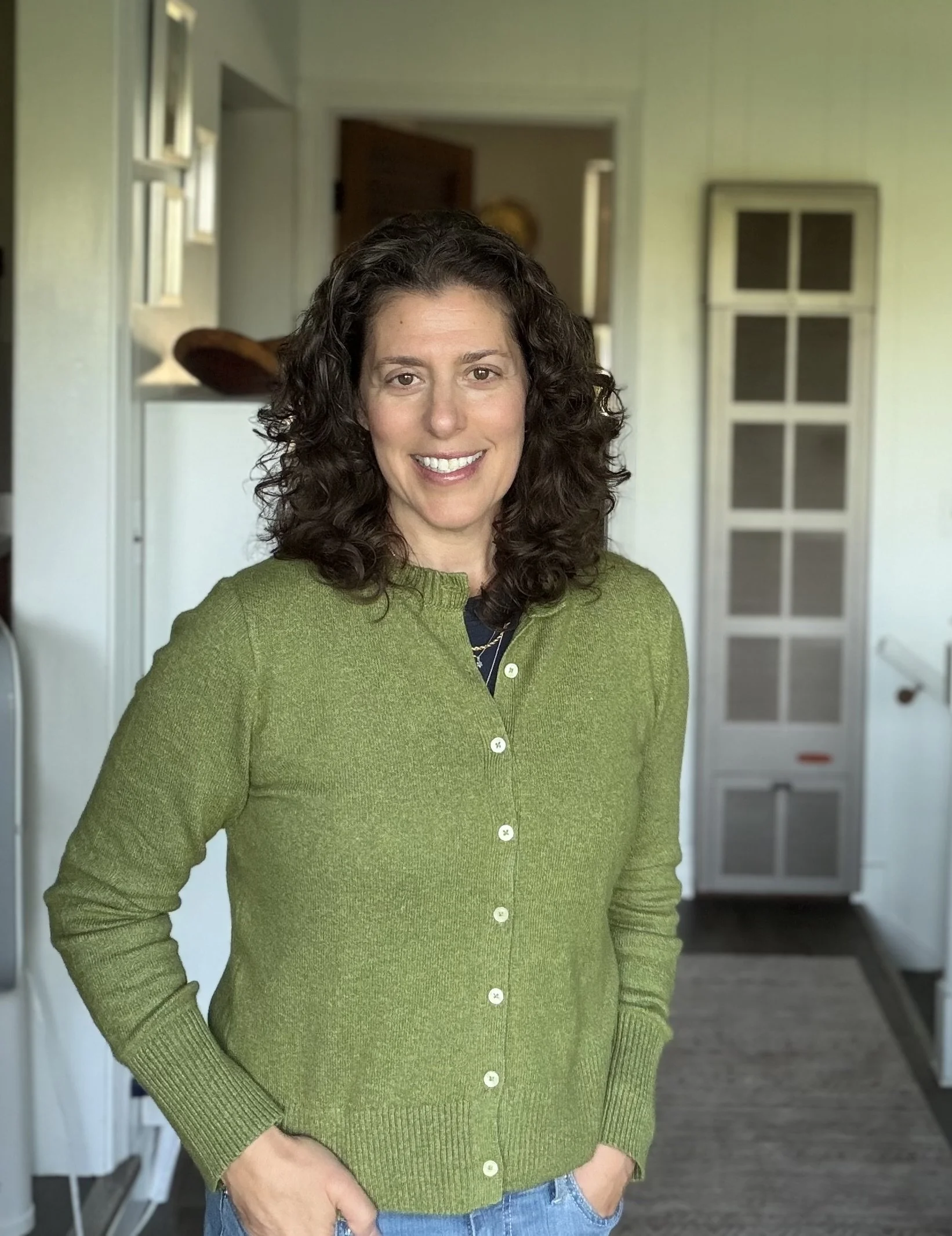
I'm Sari Glazebrook, LCSW, founder of Hopeful Heart PLLC, an EMDR-trained therapist and Psychedelic Assisted Therapy Provider (PATP), licensed in Illinois and Wisconsin.
My work is grounded in trauma-informed care, attachment, nervous-system regulation, and the protective patterns we develop throughout our lives.
And one of the first things I want you to understand is this:
You don't have to prove that your experiences were terrible enough to deserve support.
What is CPTSD, and how is it different from PTSD?
Complex post-traumatic stress disorder, or CPTSD, can develop following exposure to extremely threatening or horrific events, often prolonged or repeated experiences that are difficult to escape.
Like PTSD, it can involve re-experiencing trauma, avoidance, and a persistent sense of threat.
CPTSD also includes difficulties with emotional regulation, a negative sense of self, and challenges in relationships. https://www.ptsd.va.gov/professional/treat/essentials/complex_ptsd.asp?utm_source=chatgpt.com
CPTSD is recognized as a distinct diagnosis in the World Health Organization's ICD-11. It is not listed as a separate diagnosis in the DSM-5-TR used by many clinicians in the United States.
That distinction matters when discussing assessment and treatment.
But here's what matters even more to me.
You are not your diagnosis.
A diagnosis can help us understand symptoms and identify appropriate treatment.
It does not tell the whole story of who you are.
Can you have complex trauma if your childhood wasn't terrible?
This question comes up frequently in trauma-informed work.
And I think it's worth exploring carefully.
Not every difficult childhood experience causes CPTSD. A diagnosis requires specific trauma exposure and symptoms, and it should not be assumed simply because someone struggles with boundaries, self-worth, or relationships.
But experiences don't have to fit your personal definition of a terrible childhood to deserve attention.
Maybe you grew up in a family where emotions weren't discussed.
Maybe you learned to keep the peace.
Maybe you became the responsible child.
Maybe you learned that being successful brought approval.
Maybe your needs weren't always recognized.
Those experiences alone do not establish CPTSD.
But they may help explain some of the patterns you've carried into adulthood.
A Hopeful Heart Insight
I often want to move away from asking:
“Was my childhood bad enough?”
And toward:
“What did I learn about myself, other people, and the world?”
That question gives us somewhere meaningful to begin.
What does CPTSD look like in high-functioning adults?
CPTSD doesn't always match the picture people have in their minds of someone struggling with trauma.
Some adults continue working, maintaining relationships, raising families, and meeting responsibilities while experiencing significant distress.
Possible experiences include:
Feeling constantly on guard or easily overwhelmed
Difficulty trusting people or feeling safe in relationships
Intense shame or a persistent sense of inadequacy
Difficulty regulating emotions
Avoiding reminders of traumatic experiences
Feeling disconnected from yourself or others
Re-experiencing traumatic events through intrusive memories or other symptoms
These experiences can also occur with other mental health conditions, so a careful assessment matters. https://www.ptsd.va.gov/understand/what/complex_ptsd.asp?utm_source=chatgpt.com
In my work with high achievers, I'm particularly interested in the gap between what someone can accomplish and how they experience themselves internally.
You may be incredibly capable.
AND you may be carrying more than anyone realizes.
Why do old trauma patterns keep showing up in my adult life?
This is where one of my favorite Hopeful Heart metaphors comes in.
The Grand Canyon.
Imagine you've traveled the same road thousands of times.
Something feels uncertain.
You work harder.
Someone seems disappointed.
You try to fix it.
You feel vulnerable.
You withdraw.
You make a mistake.
You criticize yourself.
You need support.
You decide to handle it alone.
Over time, these responses can become familiar and automatic.
Our brains learn through experience and repetition, and repeated patterns can become easier to access. https://www.ptsd.va.gov/professional/treat/txessentials/complex_ptsd_assessment.asp?utm_source=chatgpt.com
I think of that old road as the Grand Canyon.
Deep.
Familiar.
Well traveled.
And sometimes difficult to leave.
But here's the part I want you to remember.
The old pathway isn't evidence that you're failing. It's evidence that you've practiced it longer.
Understanding how you got there matters.
But understanding alone doesn't automatically create a new road.
Insight explains the old road. Practice builds the new one.
What should I look for in a CPTSD therapist?
When searching for complex PTSD therapy, I encourage you to look beyond a list of techniques.
Training matters.
Experience matters.
But the relationship you develop with your therapist matters too.
You should be able to ask questions.
You should understand why a particular approach is being recommended.
You should have a voice in the pace of treatment.
And you should not feel pressured to disclose or process traumatic memories before you are ready.
Questions worth asking a potential therapist
What experience do you have working with complex trauma?
How do you assess CPTSD and related conditions?
How do you approach nervous-system regulation and emotional safety?
What happens if I become overwhelmed during a session?
How do you decide whether EMDR or another trauma treatment is appropriate?
How will we know whether therapy is helping?
A good therapeutic relationship isn't about finding someone who promises to fix you.
It's about finding someone who can work collaboratively with you.
What happens during CPTSD therapy?
There isn't one universal sequence that fits everyone.
Some people benefit from developing regulation skills and strengthening support before directly processing traumatic memories.
Others may be ready to begin trauma-focused treatment sooner.
Treatment should be individualized, based on symptoms, safety, goals, and clinical assessment. https://www.ptsd.va.gov/professional/treat/txessentials/cpg_ptsd_management.asp?utm_source=chatgpt.com
In my trauma-informed approach, I want to understand how your experiences may have shaped the way you respond today.
What happens when someone is disappointed in you?
What does your body do when you feel uncertain?
What happens when you need help?
How do you respond to conflict?
What happens when you try to rest?
These questions help us become curious about the patterns that may have once protected you.
And whether they're still helping.
Does EMDR help with complex PTSD?
EMDR, or Eye Movement Desensitization and Reprocessing, is an evidence-based psychotherapy for PTSD.
It may also be used as part of treatment for people experiencing complex trauma, although treatment planning should consider the individual's symptoms, stability, needs, and readiness. https://www.ptsd.va.gov/professional/treat/txessentials/cpg_ptsd_management.asp?utm_source=chatgpt.com
EMDR is not simply about talking through every detail of what happened.
It involves a structured treatment process that includes assessment, preparation, and reprocessing.
And not every session needs to involve trauma processing.
Sometimes the work begins with developing a greater sense of safety, recognizing protective responses, and building the capacity to remain connected to yourself.
The goal isn't to force yourself through something difficult.
It's to work in a way that supports meaningful change.
What if my trauma responses are actually character flaws?
This is one of the foundations of the Hopeful Heart Method.
Capacity, Not Character
When people struggle, they often turn their experience into a judgment about who they are.
I'm too sensitive.
I'm difficult.
I'm needy.
I'm weak.
I should be over this by now.
But what if we became curious about capacity instead?
What happens to your ability to think clearly when you feel threatened?
What happens to your ability to communicate when you're overwhelmed?
What happens to your ability to connect when your nervous system is responding to danger?
Stress and threat responses can affect attention, emotional regulation, and decision-making. https://pmc.ncbi.nlm.nih.gov/articles/PMC5756532/?utm_source=chatgpt.com
This doesn't excuse harmful behavior.
It helps us understand what may be happening so we can take responsibility for responding differently.
Regulation gives us access to choice.
And choice is a very different starting point from shame.
Can I love my family and still recognize that I was hurt?
Absolutely.
This is where The Hopeful Heart AND becomes especially meaningful.
Trauma can lead us toward rigid either/or thinking.
My parents loved me, so nothing was wrong.
I had good experiences, so I shouldn't be struggling.
Other people had it worse, so my feelings don't count.
But life is rarely that simple.
I can love my family AND recognize that some experiences hurt me.
I can understand why someone behaved the way they did AND acknowledge the impact on me.
I can appreciate my childhood AND explore what I needed.
I can be successful AND struggle with feeling safe.
I can understand my past AND choose something different for my future.
The AND doesn't require us to blame anyone.
It allows us to hold a fuller picture.
What's one Micro Habit I can practice while healing from trauma?
I want to offer something small.
Not a complete life transformation.
Not a thirty-day challenge.
And definitely not another thing you need to do perfectly.
This week, notice one moment when your old road appears.
Maybe you automatically apologize.
Maybe you say yes when you want to say no.
Maybe you begin criticizing yourself.
Maybe you feel the urge to fix someone else's discomfort.
Before doing anything else, try this:
BREATHE.
Take one comfortable breath.
NOTICE.
What am I noticing right now?
DROP IN.
Can I recognize what is happening inside me?
BREATHE INTO.
Can I gently make room for the experience without forcing it away?
STAY.
Can I remain connected to myself for one moment?
If focusing inward feels overwhelming, look around the room, notice your feet on the floor, or return to the practice later.
You don't need to change the behavior immediately.
The Micro Habit is noticing the intersection.
Awareness creates the opportunity for choice.
Is this a good fit for you?
Trauma-informed CPTSD therapy may be worth exploring if you've experienced prolonged or repeated trauma and continue struggling with emotional regulation, relationships, shame, a sense of threat, or trauma-related memories.
My approach may also resonate if you're a high-achieving adult who appears successful but feels disconnected, overwhelmed, or stuck in familiar protective patterns.
I offer weekly therapy, half-day intensives, and two-day therapy intensives, depending on individual needs and clinical appropriateness.
An intensive isn't necessarily appropriate for everyone, particularly when additional stabilization, medical care, or a higher level of support is needed.
If you're unsure whether your experiences meet the criteria for CPTSD, that's something to explore through assessment rather than self-diagnosis.
Coming Home
One of the central ideas of the Hopeful Heart Method is Coming Home.
Not becoming someone completely different.
Not eliminating every protective response.
Not becoming so perfectly regulated that nothing ever bothers you.
Coming Home means learning how to stay connected to yourself while living your life.
We begin to NOTICE the old road.
We practice MICRO HABITS, one small left turn at a time.
We use REGULATION to help ourselves come back online.
We develop a FLEXIBLE BRAIN that can hold more than one truth.
And we practice LIVING OUR VALUES, choosing how we want to live rather than automatically repeating what once felt necessary.
Then we return to Notice.
Again and again.
Not because we're failing.
Because returning is the practice.
A Final Hopeful Heart Truth
Maybe your perfectionism helped you avoid criticism.
Maybe your independence helped you manage disappointment.
Maybe your people-pleasing helped you maintain connection.
Maybe staying in control helped you feel safer.
We don't have to hate those parts of ourselves.
We can appreciate how they may have protected us AND recognize when they're costing us something today.
You don't have to prove that your trauma was bad enough.
You don't have to become someone entirely different.
And you don't have to keep traveling the same road simply because it's familiar.
The goal isn't to master life. It's to learn how to come home to yourself while living it.
If you're exploring CPTSD therapy or trauma-informed therapy in Chicago, Illinois, I offer a free 15-minute consultation to discuss what you're experiencing and whether my approach may be a good fit.
https://www.hopefulheartllc.com/
If you're in crisis, call or text 988 (the Suicide & Crisis Lifeline) or go to your nearest emergency room.
Frequently Asked Questions
What is the difference between PTSD and CPTSD?
Both PTSD and CPTSD involve trauma-related symptoms such as re-experiencing, avoidance, and a sense of threat. CPTSD also involves ongoing difficulties with emotional regulation, self-concept, and relationships. CPTSD is recognized in the ICD-11 but not as a separate diagnosis in the DSM-5-TR. A qualified clinician can assess your symptoms.
Can CPTSD develop from childhood trauma?
CPTSD can develop after prolonged or repeated traumatic experiences, including some forms of childhood abuse or neglect involving extreme threat. However, not everyone who experiences childhood adversity develops CPTSD. A diagnosis requires specific symptoms and qualifying trauma exposure, so it is important not to assume that every difficult childhood experience causes the condition.
Is EMDR effective for complex PTSD?
EMDR is an evidence-based treatment for PTSD and may be considered for people with complex trauma presentations. Treatment should be tailored to the person's symptoms, needs, and readiness. Some individuals may benefit from additional work on regulation, relationships, or safety alongside trauma-focused treatment. A trained clinician can discuss appropriate options.
How long does CPTSD therapy take?
There is no universal timeline. Treatment length depends on factors such as symptoms, trauma history, current safety, available support, and treatment goals. Some people benefit from ongoing weekly therapy, while others may consider more focused formats. A therapist should discuss expectations without promising that healing will happen within a set number of sessions.
How do I know if I need CPTSD therapy?
Consider an assessment if traumatic experiences continue to affect your emotions, relationships, sense of self, or daily life. Symptoms such as persistent shame, feeling unsafe, intrusive memories, or difficulty regulating emotions may warrant support. These experiences can have other causes too, so a careful assessment is more useful than diagnosing yourself from an online checklist.