
How Therapy Intensives Help Repair Attachment Injuries
Repairing Attachment Injuries in an Intensive Format
You keep ending up in the same place. Different relationship, maybe — or the same one, different year — but the same ache. The same wall going up. The same argument that never quite resolves. The same feeling of being too much, or not enough, or somehow always alone even when someone is right there.
If this sounds familiar, you are not broken. You are human — and you are likely living with what therapists call an attachment injury.

What Are Attachment Injuries?
Attachment injuries are emotional wounds formed when safety, trust, or connection was disrupted in a significant relationship. These aren't just the dramatic moments — though those count too. They can be the parent who was physically present but emotionally unavailable. The partner who minimized your pain one too many times. The caregiver who was inconsistent, frightening, or simply gone. The moment you reached out and no one reached back.
Our earliest relationships literally wire our nervous systems. When those relationships are wounding — even subtly — our brains and bodies learn to adapt. We learn to brace for rejection, to shrink our needs, to stay hypervigilant for signs of danger in love. These adaptations once kept us safe. But they tend to travel with us long after the original wound has passed, quietly shaping how we trust, how we communicate, and whether we ever really let someone in.
Attachment trauma doesn't always look like trauma. It can look like pulling away when someone gets too close. It can look like anxious texting at midnight. It can look like rage that feels disproportionate, or a numbness you can't explain. It can look like choosing partners who confirm what you already believe — that love is unsafe, unreliable, or conditional.
These patterns are not character flaws. They are learned responses. And they can be healed.
Why They're Hard to Heal in Weekly Therapy
Traditional weekly therapy is genuinely valuable — and for many people, it's an important part of the healing journey. But attachment injuries present a particular challenge within that format.
Here's why: the nervous system doesn't heal on a schedule. Processing deep relational wounds requires the kind of sustained attention and safety that's hard to access in a 50-minute window. Just as you begin to approach something tender, the session ends. You go back to your week, your relationship, your life — often before the emotional thread has been followed all the way through. The window closes before the window has really opened.
There's also the matter of time between sessions. A week is a long time when you're in the middle of relational pain. Patterns reinforced over decades don't easily yield to once-a-week conversations, no matter how skilled the therapist. For couples especially, the space between sessions can be filled with the same cycles that brought them to therapy in the first place — without the tools or support to do anything differently in the moment.
This isn't a failure of traditional therapy. It's simply a recognition that some wounds need more time, more continuity, and more concentrated care than a weekly model can offer.
How Intensives Support Attachment Repair
This is where therapy intensives offer something genuinely different.
A therapy intensive is an extended, structured therapeutic experience — typically held over one to three days — that creates a focused, contained space for deeper work. Instead of an hour a week, you have hours of consecutive time: time to go slow, time to sit with what arises, time to follow an emotional thread all the way to its source and begin building something new.
For those carrying attachment trauma, this format can be transformative for several reasons.
Sustained presence changes the nervous system. Healing attachment injuries is fundamentally a relational process — it happens in relationship, not just by talking about relationship. In a couples therapy intensive, two people get to stay in the room together long enough for something real to shift. The therapist can support you through a rupture and a repair, in real time. That lived experience of "we got through something hard together" begins to rewire the old story.
Extended time allows for deeper processing. Approaches like EMDR (Eye Movement Desensitization and Reprocessing) are particularly well-suited to the intensive format. EMDR works directly with how traumatic memories are stored in the body and brain, helping to process experiences that talk therapy alone may not reach. In an intensive, there's enough time to begin and complete reprocessing — rather than stopping just as the work gets meaningful.
Emotionally Focused Therapy (EFT) is another powerful approach often used in intensives. EFT helps couples identify the underlying attachment needs driving their conflict cycles, and creates new interactional patterns built on vulnerability and responsiveness rather than reactivity. When practiced over multiple consecutive hours, couples can move through several cycles of negative interaction and begin to replace them with something more connected.
Other somatic approaches — those that work with the body's held responses to stress and relational threat — also integrate naturally into intensive work. When you have time to slow down, to breathe, to notice what's happening in your chest or your throat or your hands, the body can begin to release what it's been protecting for years.
Emotional safety is cultivated, not rushed. In a couples therapy intensive, the therapist holds a carefully structured space where both partners feel seen and neither is blamed. This itself begins to repair attachment injuries — the experience of being witnessed with compassion, of having your pain validated, of watching your partner really hear you, is therapeutic in its own right. Over the course of an intensive, couples often describe a shift they didn't think was possible: from defensive distance to genuine closeness.
Relationship Healing Is Possible — Even Now
If you've been stuck in the same patterns for years, it can be hard to believe that things could actually be different. You may have tried therapy before. You may have had conversations that went nowhere. You may have wondered if you or your partner are simply too far gone.
You're not.
Attachment injuries formed in relationship, and they heal in relationship — with the right support, the right timing, and enough space to do the work. Relationship healing doesn't require you to become someone different. It asks you to understand the story beneath the story, and to begin writing something new.
Ready to Go Deeper?
If you're feeling called to move beyond the weekly-session model and create real, lasting change in your relationship with yourself or your partner, a therapy intensive may be the right next step.
Intensives are designed for couples and individuals who are ready to stop circling the same wounds and start healing them — with focused time, skilled support, and a container that holds space for the full depth of what you're carrying.
Reach out today to learn more about therapy intensives for relationship healing. You deserve support that meets the size of what you've been through — and care that gives you real time to find your way back to each other, and to yourself.
Keywords: attachment trauma, therapy intensives, couples therapy intensive, emotional safety, relationship healing, EMDR, attachment injuries, attachment repair
ABOUT THE AUTHOR
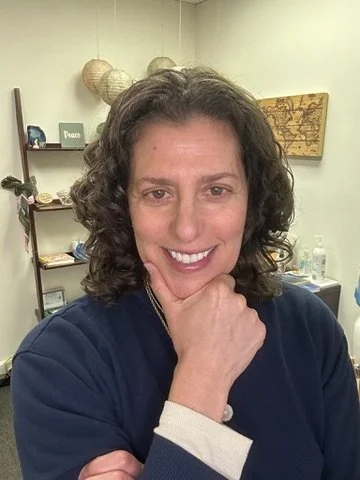
Sari Glazebrook LCSW is a licensed clinical social worker providing in person psychotherapy in Northfield, IL and North Suburban Chicago with virtual sessions available across Illinois and Wisconsin. She specializes in trauma therapy and therapy intensives, integrating EMDR and somatic approaches to help clients process deeply, regulate effectively, and create lasting change. At Hopeful Heart, Sari provides compassionate, trauma-informed care that fits real life—whether that’s weekly or in therapy intensives.work.
https://www.hopefulheartllc.com/about-me
https://www.hopefulheartllc.com/
Hopeful Heart LLC
540 Frontage Rd., Suite 3215, Northfield, IL 60093
224-456-8367