
How Trauma Impacts Focus and Executive Function

When Your Brain Isn't Failing You—It's Using Its Energy to Keep You Safe
If you struggle with focus, memory, organization, brain fog, or following through—even on things that matter to you—it may not be a motivation problem.
Trauma and chronic stress can keep the nervous system focused on survival. When the brain is continually scanning for danger, anticipating problems, or managing emotional overwhelm, fewer resources are available for executive function—the mental skills we rely on to plan, prioritize, remember, organize, regulate attention, and complete tasks.
This doesn't mean you're lazy or incapable. Your brain may be doing exactly what it learned to do to protect you.
Through trauma therapy, nervous system regulation, and intentional micro practices, we can begin creating enough safety for the brain to use more of its capacity for the life happening right now.
When You Can't Seem to Get Your Brain to Cooperate
You walk into a room and forget why you're there.
You reread the same paragraph three times.
You make a list—and lose the list.
You know you need to make an appointment, return an email, pay a bill, or finish a project.
You genuinely intend to do it.
And somehow...you don't.
Maybe you've wondered:
"Why can't I just get it together?"
"Why can everyone else manage this?"
"Why do simple things feel so hard?"
"Am I just lazy?"
If you've asked yourself these questions, I want to offer you another possibility.
What if your brain isn't failing you?
What if your brain has simply been very busy doing something else?
Surviving.
Hopeful Heart Insight:
Survival Requires Energy
Your brain and nervous system have limited resources.
When your body perceives safety, those resources can be used for all kinds of higher-level functions.
Planning.
Problem-solving.
Learning.
Memory.
Creativity.
Decision-making.
Sustained attention.
But when your nervous system perceives threat, priorities change.
Survival comes first.
A nervous system shaped by trauma or chronic stress can remain watchful even when there is no immediate danger.
Part of you may be sitting at your desk trying to finish a report.
Meanwhile, another part of your brain may be monitoring:
Is everyone okay?
Did I upset someone?
What did that text mean?
What am I forgetting?
What could go wrong?
What do I need to prepare for next?
That's a lot of background processing.
And it takes energy.
The Trauma and Executive Function Connection
Executive function is an umbrella term for the mental abilities that help us manage everyday life.
They allow us to:
Focus and sustain attention
Hold information in working memory
Organize
Prioritize
Begin tasks
Shift between tasks
Manage impulses
Make decisions
Follow through
The prefrontal cortex plays an important role in these higher-order functions.
Under significant stress, however, the brain shifts resources toward systems designed to detect and respond to potential threats.
Your heart may beat faster.
Your muscles may tense.
Your attention may narrow.
Your body prepares to respond.
That's useful when you're actually in danger.
But when chronic stress keeps that system activated over and over again, the very abilities you need to manage everyday life can become harder to access.
You may experience brain fog, forgetfulness, difficulty concentrating, indecision, or an inability to get started.
This is one reason the relationship between trauma and focus deserves so much more compassion than it usually receives.
What This Can Look Like in Everyday Life
Executive function difficulties don't always look dramatic.
Sometimes they look like 37 browser tabs open because you keep starting things without finishing them.
Sometimes they look like staring at an email you could probably answer in three minutes but feeling completely unable to begin.
You may:
Forget appointments despite putting them on your calendar.
Walk into rooms and forget what you needed.
Have trouble following conversations when you're stressed.
Lose your keys, phone, or glasses constantly.
Feel overwhelmed deciding what to do first.
Procrastinate on relatively simple tasks.
Start multiple projects without completing them.
Forget details you know someone told you.
Feel mentally exhausted after making ordinary decisions.
Become incredibly productive during a crisis and crash afterward.
Need a deadline—or even a little panic—to finally get something done.
Sometimes you can focus beautifully on something interesting but feel almost physically unable to concentrate on something mundane.
And sometimes the harder you try to force yourself to focus, the less available your brain seems to become.
Why This Isn't Laziness or a Character Flaw
This is where I want us to change the question.
Instead of:
"What's wrong with me?"
Try:
"What is my nervous system managing right now?"
Those questions come from completely different places.
One begins with criticism.
The other begins with curiosity.
And at Hopeful Heart, we believe curiosity creates space where criticism cannot.
Difficulty with focus can have many causes. ADHD, depression, anxiety, sleep problems, medical conditions, medications, hormonal changes, and other factors can all affect executive function. Trauma-related difficulties shouldn't automatically be assumed to be ADHD, and ADHD shouldn't automatically be attributed to trauma. Sometimes both are present.
Understanding what's underneath the symptoms matters.
But regardless of the cause, repeatedly calling yourself lazy rarely makes your nervous system function better.
Shame consumes capacity too.
Trauma and Memory: "Why Can't I Remember?"
Memory is another area where people can become incredibly hard on themselves.
"I used to have such a good memory."
"Someone tells me something and five minutes later it's gone."
"Why can't I remember anything anymore?"
Working memory—the ability to temporarily hold and use information—is part of executive functioning.
Think of it like a mental workspace.
If that workspace is already crowded with worry, hypervigilance, emotional processing, and anticipating what might happen next, there's simply less room available for everything else.
That doesn't mean your memories have disappeared.
It means your system may be overloaded.
Capacity, not character.
That distinction matters.
The Hopeful Heart AND Practice
This is where we practice holding two truths.
I am struggling to focus...
AND
I am not lazy.
My memory doesn't feel as sharp as I'd like...
AND
my intelligence hasn't disappeared.
My nervous system learned to anticipate danger...
AND
it can learn new experiences of safety.
I can have compassion for why these patterns developed...
AND
I can work toward changing them.
Two things can be true.
We can honor what helped us survive while choosing what helps us live now.
Regulation Before Productivity
Our culture loves productivity strategies.
Get a better planner.
Wake up earlier.
Download another app.
Make another list.
Create a morning routine.
Those tools can absolutely be helpful.
But sometimes we're trying to solve a nervous system problem with a productivity solution.
If your body is living in survival mode, another organizational system may not address what's actually happening underneath.
This is why one of the guiding ideas behind the Hopeful Heart Method is:
Safety before strategy.
Before asking your brain to do more, we can begin helping your body feel safer doing what is already being asked of it.
As nervous system regulation increases, we often create more capacity for everything else.
Not overnight.
Not perfectly.
Gradually.
Today's Hopeful Heart Micro Practice:
One Thing
When executive function is overwhelmed, we often respond by making a giant list of everything we're behind on.
Then we look at the list.
Become overwhelmed.
And do nothing.
So today's micro practice is intentionally small.
Ask yourself:
What is one thing I can complete right now?
Not the most important thing in your entire life.
Not everything you've been avoiding.
One thing.
Then make it smaller.
Instead of:
"Clean the kitchen."
Try:
"Empty the dishwasher."
Instead of:
"Deal with my finances."
Try:
"Open the bill."
Instead of:
"Get caught up on email."
Try:
"Respond to one email."
Completion can create a small experience of safety and capability.
And micro practices are not about proving how productive you can be.
They're about helping you build trust with yourself.
How Trauma Therapy Helps Address the Root, Not Just the Symptoms
There are wonderful strategies for supporting executive function.
Calendars help.
Reminders help.
Routines help.
Lists help.
Reducing distractions helps.
But if trauma or chronic stress is contributing to the problem, I also want to understand why your nervous system is working so hard in the first place.
Trauma therapy gives us the opportunity to explore what your system learned about safety, danger, relationships, responsibility, and control.
Through approaches such as EMDR, attachment work, somatic awareness, mindfulness, and nervous system regulation, we can begin addressing the underlying activation rather than simply asking you to become better at managing its symptoms.
As the nervous system develops greater capacity for regulation, more resources may become available for the present.
For focus.
For memory.
For relationships.
For creativity.
For rest.
For the things that make life meaningful.
The goal isn't to turn you into a productivity machine.
The goal is to help you have greater access to yourself.
Coming Home
Before you move on with your day, pause for a moment.
Notice without judgment.
When is it hardest for me to focus?
What is happening in my body during those moments?
Does my executive function change when I feel safe, rested, or connected?
Where am I using shame to motivate myself?
What would change if I viewed this struggle through the lens of capacity rather than character?
And finally:
What is one micro practice that would support my nervous system today?
You don't need to fix everything you noticed.
Remember:
Awareness always comes before change.
A Final Hopeful Heart Truth
There are seasons when simply moving through life requires tremendous energy.
AND
you may look completely functional from the outside.
That's part of what makes invisible struggles so difficult.
If your brain has spent years helping you survive, we don't need to shame it for being tired.
We can appreciate what it learned to do.
We can understand it.
We can support it.
AND we can gently teach it that it doesn't have to work quite so hard anymore.
Healing isn't about becoming someone new.
It's about creating enough safety and capacity to become more fully yourself.
If Focus, Memory, or Follow-Through Feels Consistently Out of Reach
If you're constantly fighting brain fog, forgetfulness, difficulty concentrating, overwhelm, or an inability to follow through—and you're tired of assuming you simply need to try harder—there may be more happening underneath.
Trauma therapy and anxiety support can help you understand the relationship between your experiences, your nervous system, and the way you're functioning today.
You don't need another reason to criticize yourself.
You may need a different way of understanding yourself.
If your nervous system rarely gets a chance to settle and focus, memory, or follow-through consistently feels out of reach, I invite you to reach out for support.
I'd be honored to walk alongside you.
About Sari
Sari Glazebrook, LCSW is a licensed clinical social worker and founder of Hopeful Heart LLC, with more than 15 years of experience helping adults heal from trauma, anxiety, chronic stress, and survival patterns that can leave the nervous system feeling constantly activated.
Serving clients in the north suburbs of Chicago and virtually throughout Illinois and Wisconsin, Sari integrates EMDR, attachment theory, mindfulness, somatic and nervous-system-informed approaches, and evidence-based trauma therapy. Her work helps clients develop greater nervous system regulation, emotional resilience, healthier relationships, and a deeper connection to themselves.
Sari's work is grounded in a simple belief: every person deserves to feel safe in their body as they move through the world.
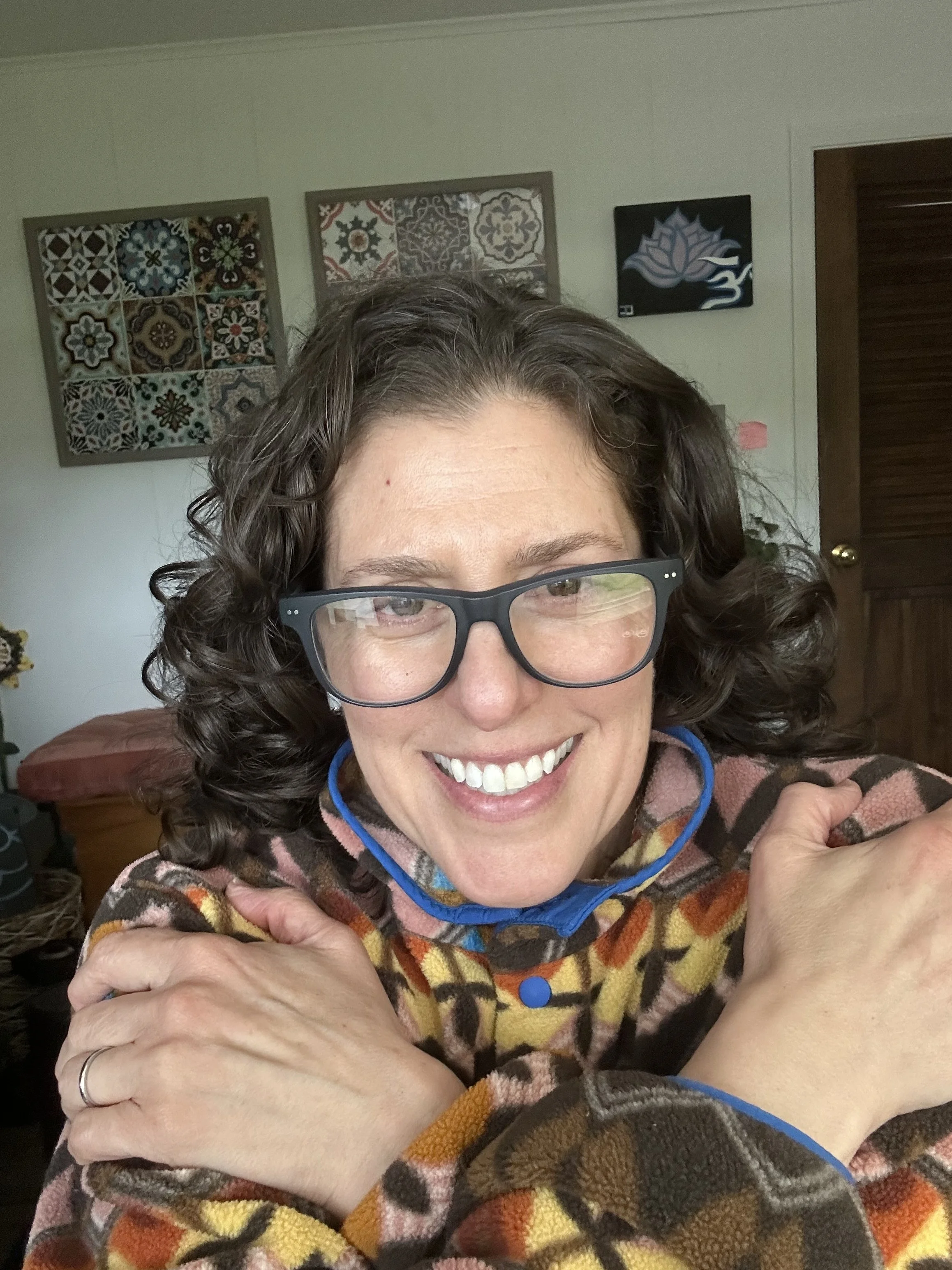
About Sari
Sari Glazebrook, LCSW is a licensed clinical social worker and founder of Hopeful Heart LLC, with more than 15 years of experience helping adults heal from trauma, anxiety, chronic stress, and survival patterns that can leave the nervous system feeling constantly activated.
Serving clients in the north suburbs of Chicago and virtually throughout Illinois and Wisconsin, Sari integrates EMDR, attachment theory, mindfulness, somatic and nervous-system-informed approaches, and evidence-based trauma therapy. Her work helps clients develop greater nervous system regulation, emotional resilience, healthier relationships, and a deeper connection to themselves.
Sari's work is grounded in a simple belief: every person deserves to feel safe in their body as they move through the world.