
Still Feel Stuck After Years of Therapy? An Intensive Might Help

feeling stuck in therapy
Therapy Intensives for People Who’ve “Done a Lot of Therapy”
If you've spent years in therapy, read countless books, listened to podcasts, practiced self-awareness, and worked hard on your healing—but still find yourself reacting in the same ways, feeling disconnected, or getting stuck in familiar patterns—you are not alone.
Many people reach a point where they understand their struggles intellectually yet continue to feel emotionally activated, overwhelmed, or blocked in everyday life. This can be incredibly frustrating. You may wonder, "Why do I still feel this way after all the work I've done?"
The answer is not that you've failed. In many cases, it reflects the reality that insight alone is not always enough to create lasting change.
For some people, deeper healing requires a different approach—one that goes beyond talking about experiences and allows the nervous system, emotions, and body to fully process them.
This is where therapy intensives can offer something different.
Why Insight Alone Isn't Always Enough
Traditional therapy often helps us understand our stories, identify patterns, and develop awareness. These are important and valuable parts of healing.
The challenge is that trauma, chronic stress, attachment wounds, and emotional experiences are not stored only in the thinking part of the brain.
Many clients can clearly explain:
Why they struggle with people-pleasing
Where their perfectionism comes from
How childhood experiences shaped their relationships
Why they become anxious, shut down, or overwhelmed
Yet despite this understanding, they still find themselves:
Overreacting in stressful situations
Feeling emotionally disconnected
Struggling with self-trust
Repeating relationship patterns
Experiencing anxiety, burnout, or chronic overwhelm
This happens because healing is not simply a cognitive process. The nervous system often needs an opportunity to experience safety, process unresolved material, and integrate new experiences at a deeper level.
Knowing is important.
Experiencing and integrating are what often create lasting change.
Why Weekly Therapy Can Plateau
Weekly therapy can be incredibly effective, but it also has natural limitations.
A 50-minute session often requires time to:
Check in on the week's events
Address immediate concerns
Re-regulate before ending
Pause processing to return to daily life
For clients with complex trauma, longstanding patterns, or significant emotional blocks, this stop-and-start rhythm can sometimes slow deeper work.
Many people find themselves revisiting the same topics week after week without feeling meaningful movement.
This doesn't mean therapy isn't working.
It simply means that the pace and structure of weekly therapy may not always provide enough uninterrupted time for deeper processing and integration.
Imagine trying to complete a puzzle by working on it for only a few minutes each week before putting all the pieces back in the box.
Progress happens—but often much more slowly.
How Therapy Intensives Offer Something Different
Therapy intensives provide extended, focused time dedicated entirely to your healing process.
Rather than squeezing meaningful work into a brief weekly session, an intensive creates space to go deeper, stay with the process longer, and move through layers that might otherwise take months to access.
Many clients describe therapy intensives as the first time they've felt they could fully settle into the work without watching the clock.
During a trauma therapy intensive, there is time to:
Identify core patterns and protective strategies
Explore underlying emotions
Process unresolved experiences
Regulate the nervous system
Integrate insights in real time
Develop concrete next steps for continued growth
Because there is more uninterrupted space, clients often move beyond simply talking about issues and into actually experiencing change.
Experiential Approaches That Support Deep Healing
Therapy intensives often incorporate experiential modalities that engage more than the thinking mind.
Depending on your needs, this may include approaches such as:
EMDR Intensives
An EMDR intensive allows clients to process distressing experiences and stored emotional material in a focused format. Rather than spreading the work across months of weekly sessions, an EMDR intensive can create opportunities for significant progress within a concentrated period of time.
Somatic-Felt Sense Therapy
Felt sense is a somatic tool used used when working with trauma that is often painful cognitively. We focus on feelings and sensations that are present in the body. Working to understand the signals that our nervous system is sending.
Nervous System-Focused Healing
Many therapy intensives incorporate nervous system regulation practices that help clients move out of survival responses and into greater feelings of safety, flexibility, and connection.
What Feeling "Stuck" Can Actually Mean
Feeling stuck in therapy does not necessarily mean you are resistant to change.
Often, it means:
Your nervous system needs a different approach
More processing time is needed
Deeper layers are ready to emerge
Healing is asking for something beyond insight
In fact, many of the people who benefit most from therapy intensives are highly motivated individuals who have already done significant personal growth work.
They are not avoiding healing.
They are ready for the next level of it.
You Don't Have to Keep Spinning Your Wheels
If you've done years of therapy and still find yourself saying:
"I know where this comes from, but I still react."
"I've talked about this forever."
"I understand the pattern, but it won't change."
"I feel stuck despite doing all the work."
Know that there is nothing wrong with you.
Sometimes healing requires more space, more depth, and a different path forward.
Therapy intensives offer an opportunity to move beyond insight alone and into deeper healing, nervous system regulation, and meaningful integration.
If you're feeling stuck in therapy despite doing all the work, consider exploring a trauma therapy intensive, EMDR intensive, or other experiential approach. The breakthrough you're seeking may not require more effort—it may simply require a different container for healing.
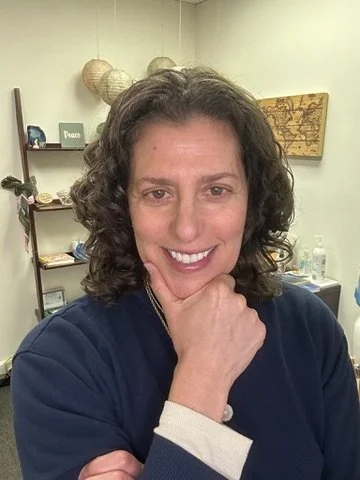
ABOUT THE AUTHOR
Sari Glazebrook LCSW is a licensed clinical social worker providing in person psychotherapy in Northfield, IL and North Suburban Chicago with virtual sessions available across Illinois and Wisconsin. She specializes in trauma therapy and therapy intensives, integrating EMDR and somatic approaches to help clients process deeply, regulate effectively, and create lasting change. At Hopeful Heart, Sari provides compassionate, trauma-informed care that fits real life—whether that’s weekly or in therapy intensives.work.
https://www.hopefulheartllc.com/about-me
https://www.hopefulheartllc.com/
Hopeful Heart LLC
540 Frontage Rd., Suite 3215, Northfield, IL 60093
224-456-8367