
Trauma Isn't Always One Big Event

What if nothing “terrible” happened—but you're still carrying the effects?
When people hear the word trauma, they often imagine one defining event: an accident, assault, natural disaster, sudden loss, or another experience that clearly divides life into before and after.
But trauma isn't always one big event.
Sometimes it develops through experiences that happened repeatedly or relationships in which you didn't consistently feel emotionally safe, seen, protected, or supported. Childhood trauma and cumulative trauma can be harder to recognize precisely because there may not be one moment you can point to and say, That was it.
You may even tell yourself, Nothing that bad happened to me.
And maybe nothing catastrophic did.
AND your nervous system may still have adapted to what happened over time.
Understanding those adaptations isn't about blaming your childhood, labeling every difficult experience as trauma, or deciding something terrible must have happened to you.
It's about becoming curious about the patterns you're living with today—and understanding where they may have come from.
“I don't think I have trauma.”
I've heard some version of this many times in my work as a therapist.
Usually, it's followed by an explanation.
My parents weren't abusive.
We had a nice house.
I had everything I needed.
Other people had it much worse.
Nothing really happened to me.
And sometimes all of those things are true.
There wasn't one terrible event.
There isn't a single memory that explains everything.
There may even have been a lot of love in your family.
And yet, as an adult, maybe you:
constantly worry about disappointing people,
feel responsible for everyone else's emotions,
have difficulty asking for help,
panic when someone is upset with you,
struggle to rest without feeling guilty,
feel like you always have to be productive,
shut down during conflict,
need everything to be under control,
have trouble trusting people,
or live with anxiety that doesn't seem to have an obvious source.
So you wonder:
Why am I like this?
And because you can't point to one defining traumatic event, you may conclude that whatever you're struggling with must simply be a flaw in you.
I want to offer another possibility.
Hopeful Heart Insight: Trauma Isn't Always a Single Moment
Sometimes trauma has a clear beginning.
Something happened.
The nervous system became overwhelmed.
And afterward, life felt different.
But sometimes there isn't one event.
Sometimes it's cumulative.
Sometimes it's relational.
Sometimes it's the experience of living for years in an environment where your nervous system had to stay alert, adapt, perform, disconnect, or take care of other people in order to maintain safety or connection.
The individual experiences may not look dramatic from the outside.
But repeated experiences teach the nervous system, too.
The nervous system learns through patterns.
What happens when I make a mistake?
What happens when someone is angry?
What happens when I need comfort?
What happens when I say no?
What happens when I disappoint someone?
What happens when I have a feeling that's inconvenient for somebody else?
Over time, your brain and body develop strategies based on the answers.
Those strategies can become so familiar that eventually they don't feel like strategies at all.
They feel like you.
What Cumulative or Relational Trauma Can Look Like
Cumulative trauma doesn't have one single appearance, it is sometimes called CPTSD.
It can include growing up around chronic conflict or unpredictability.
It can mean having a parent whose own emotional needs regularly took up most of the room.
It can mean experiencing repeated criticism, teasing, bullying, rejection, or humiliation.
It can mean growing up with addiction, mental illness, instability, or significant stress in the family.
It can mean frequently feeling responsible for keeping the peace.
It can mean learning to become the “easy child” because there was already too much happening.
It can mean being expected to grow up too quickly.
It can mean having your emotions repeatedly minimized:
You're too sensitive.
Stop crying.
It's not a big deal.
You're fine.
It can mean receiving love and care AND learning that certain parts of you were easier for other people to accept than others.
It can also mean experiencing repeated loss, medical stress, financial instability, discrimination, school difficulties, family disruption, or other ongoing stressors without enough opportunity to recover.
Not every difficult childhood experience becomes trauma.
Not every imperfect parent causes trauma.
And recognizing how an experience affected you does not require turning someone else into a villain.
What matters is becoming curious about what your nervous system learned from the experiences you repeatedly had.
“But Other People Had It Worse”
This is one of the most common ways people dismiss their own experiences.
And technically?
You may be right.
Someone else probably did have it worse.
Someone will almost always have experienced something more severe.
But comparison isn't particularly helpful to a nervous system.
Your nervous system isn't sitting around creating a ranked list of human suffering before deciding whether it's allowed to respond.
It responds to the experiences you are having.
If you repeatedly had to anticipate someone else's mood, your nervous system may have become very good at scanning people.
If expressing emotion led to criticism or withdrawal, you may have learned to hide emotion.
If achievement brought attention or approval, you may have learned to overperform.
If depending on people frequently led to disappointment, you may have learned:
I'll do it myself.
If conflict threatened connection, you may have learned:
Keep everyone happy.
Years later, we might call some of these patterns:
people pleasing,
perfectionism,
hyper-independence,
hypervigilance,
overfunctioning,
emotional avoidance,
difficulty with boundaries,
or chronic anxiety.
But before criticizing those patterns, I think we should ask a different question:
What problem was this trying to solve?
Capacity, Not Character
This is where I come back to something I say often in the Hopeful Heart approach:
Capacity, not character.
Maybe you're not “too sensitive.”
Maybe your nervous system became highly attuned to other people's emotions because there was a time when noticing subtle changes mattered.
Maybe you're not controlling.
Maybe predictability helps your body feel safer.
Maybe you're not bad at relationships.
Maybe vulnerability activates old expectations about what happens when you depend on someone.
Maybe you're not lazy when you finally crash.
Maybe you've spent years carrying more internally than anyone could see.
When we interpret every struggle as a character flaw, shame grows.
When we become curious about the nervous system underneath the behavior, we gain information.
And information gives us somewhere to begin.
Your Nervous System Remembers Patterns
Our brains are pattern-making machines.
They learn from repetition.
I often explain old neural pathways to clients by comparing them to the Grand Canyon.
The pathways you've traveled repeatedly become deep.
Automatic.
Easy to find.
If you learned early:
Don't upset anyone.
That road may become people pleasing.
If you learned:
I need to get everything right.
That road may become perfectionism.
If you learned:
I can't count on anyone.
That road may become hyper-independence.
If you learned:
Something could go wrong at any moment.
That road may become hypervigilance.
You don't consciously decide each morning to travel those roads.
Your brain knows the route.
That's why insight alone doesn't always create change.
You can understand exactly where a pattern came from AND still find yourself doing it.
But here's the hopeful part:
Brains are malleable.
We can create and strengthen new neural pathways.
It takes repetition.
Again and again, we notice the intersection.
We pause.
We regulate enough to come back online.
And we practice making a different turn.
The goal isn't to erase the Grand Canyon.
It's to create more than one road.
The Hopeful Heart AND
When people begin recognizing the impact of childhood trauma or cumulative trauma, they sometimes believe they have to rewrite their entire history.
If I acknowledge that something hurt me, does that mean my parents were terrible?
If I had good things in my childhood, am I allowed to say something was missing?
If someone loved me, how could the relationship have affected me negatively?
This is where duality matters.
Two things can be true.
My parents loved me AND there were things they couldn't give me.
I had a good childhood in many ways AND some experiences shaped me deeply.
Someone may have done the best they could AND I can still acknowledge how their behavior affected me.
I can understand why someone behaved the way they did AND recognize that it hurt me.
I can be grateful for what I had AND grieve what I needed.
We don't have to flatten complicated human relationships into good or bad.
Healing often asks us to become flexible enough to hold the whole story.
Today's Hopeful Heart Micro Practice: “What Did I Learn?”
You don't need to go searching your childhood for trauma.
And you don't need to decide today whether anything that happened to you “counts.”
Instead, try getting curious about one pattern you struggle with now.
Maybe it's:
people pleasing,
perfectionism,
difficulty asking for help,
overthinking,
shutting down,
needing control,
fear of disappointing people,
or difficulty resting.
Then ask yourself:
What might I have learned that made this response make sense?
Maybe:
I learned that being helpful kept people happy.
I learned that mistakes brought criticism.
I learned that my feelings overwhelmed other people.
I learned that depending on someone wasn't reliable.
I learned that achievement made me feel valuable.
You aren't trying to diagnose yourself.
You're practicing something much simpler:
curiosity instead of criticism.
Instead of:
What's wrong with me?
Try:
What happened—or happened repeatedly—that taught me to respond this way?
And then:
Does this still serve the life I want today?
That small shift is where awareness begins creating choice.
How Trauma Therapy Helps You Make Sense of the Story
Trauma therapy isn't about convincing you that your childhood was terrible.
It isn't about blaming your parents.
And it isn't about digging through your history looking for something awful enough to explain your struggles.
It's about understanding the relationship between what you've experienced and how you've learned to survive, connect, protect yourself, and move through the world.
Sometimes that includes trauma processing through approaches such as EMDR.
Sometimes it means developing nervous system regulation skills so you can recognize activation and help yourself come back online.
Sometimes it means exploring attachment and relational patterns.
Sometimes it means recognizing emotional invalidation that you previously dismissed because it didn't seem “bad enough.”
And sometimes it means appreciating a survival strategy for what it did for you AND deciding you don't need it in quite the same way anymore.
That distinction matters.
We don't have to hate the old pattern to build a new one.
Coming Home
Sometimes understanding trauma feels like going backward.
We're looking at childhood.
Old relationships.
Old experiences.
Things we thought we'd moved beyond.
But I don't think the purpose of this work is to live in the past.
It's to understand enough about where you've been that you have more freedom in deciding where you're going.
Coming Home is part of that.
In the Hopeful Heart approach, coming home means learning to return to yourself with curiosity rather than judgment.
It's noticing:
There I go again, trying to keep everyone happy.
And instead of:
Why am I like this?
Maybe:
Of course this is where my brain went. This road is familiar.
Take a breath.
Notice what is happening in your body.
Come back online.
And ask:
What do I need right now to stay connected to myself?
Coming home doesn't mean becoming the person you were before difficult things happened.
And it doesn't require finding one moment when everything changed.
Sometimes coming home means meeting the person who adapted to everything that happened along the way—and finally understanding them.
You can appreciate how hard you've worked to protect yourself AND begin choosing something different.
You can honor where you've been AND decide where you want to go.
You can understand the old road AND practice making the left turn.
Again.
And again.
And again.
Until one day the new road doesn't feel quite so new.
A Final Hopeful Heart Truth
You don't need a dramatic story to deserve support.
You don't have to prove that what happened was “bad enough.”
And you don't need to adopt the word trauma if it doesn't feel right to you.
The more useful question may be:
How have my experiences shaped the way I learned to move through the world?
Because healing isn't a competition over whose experiences were hardest.
It's an opportunity to understand yourself more fully.
Maybe the patterns you've spent years criticizing weren't evidence that something was wrong with you.
Maybe they were your nervous system's best attempt to help you navigate the circumstances you were given.
They deserve understanding.
AND they don't have to determine the rest of your life.
If You've Never Felt Like Your Story Was “Bad Enough”
If you've spent years thinking, Nothing that bad happened to me, but you're still struggling with anxiety, people pleasing, perfectionism, emotional overwhelm, relationship patterns, or difficulty feeling safe and settled, you don't have to wait until your story sounds more dramatic to ask for help.
At Hopeful Heart, I help adults understand the connection between past experiences, present-day patterns, and the nervous system without judgment or pressure to label their experiences a particular way.
Through trauma therapy, nervous system regulation, attachment-focused work, and trauma processing approaches such as EMDR, we can become curious about the patterns that developed, understand why they made sense, and begin practicing new ways of responding.
If you've never believed your experiences were “bad enough” to deserve support AND you're still struggling, reach out to Hopeful Heart.
You don't have to prove your pain before you're allowed to understand it.
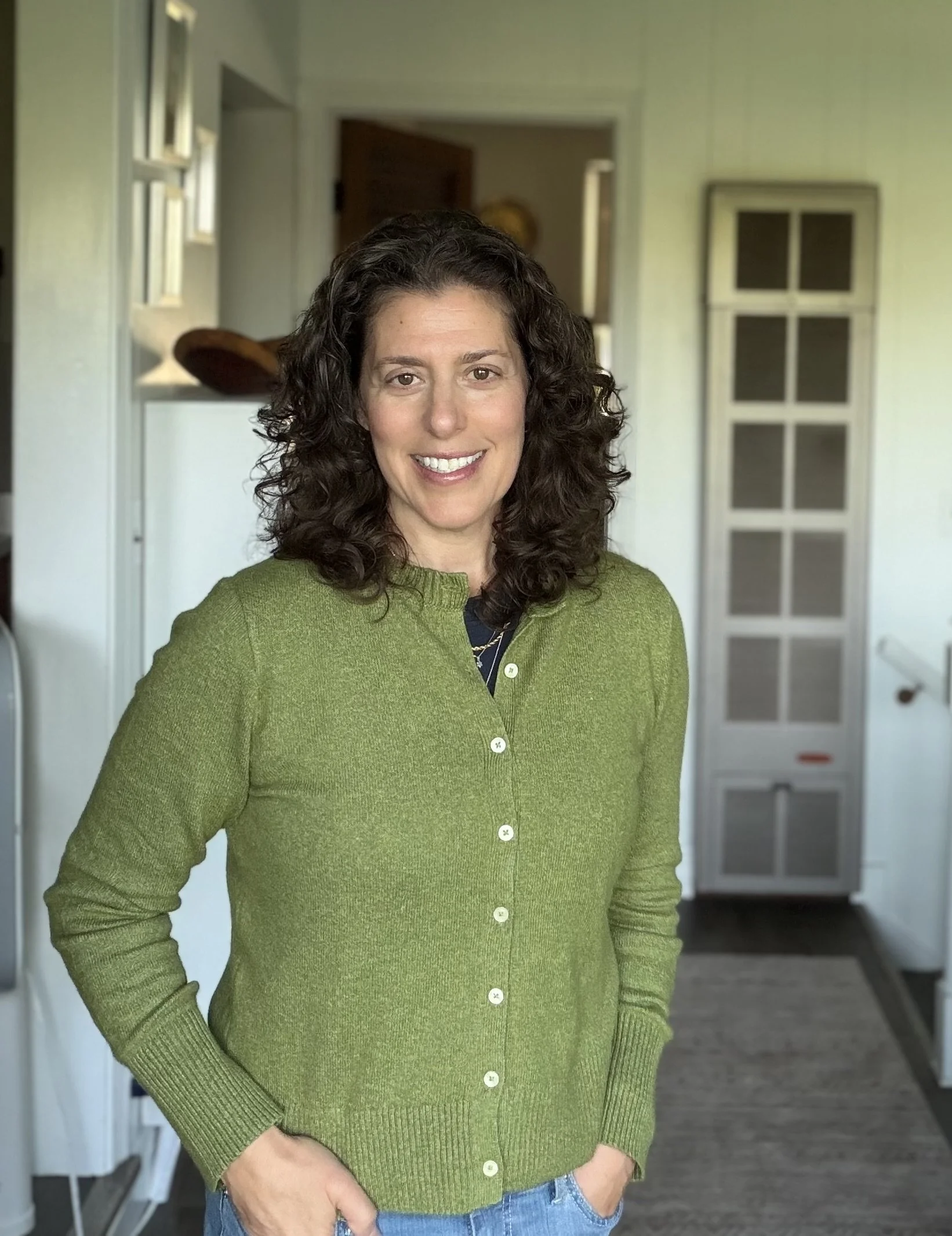
About Sari Glazebrook, LCSW
Sari Glazebrook, LCSW, is a licensed clinical social worker and founder of Hopeful Heart LLC with more than 15 years of experience helping adults understand and heal from trauma, anxiety, chronic stress, emotional overwhelm, and longstanding relational patterns in the north suburbs of Chicago.
Sari specializes in trauma-informed therapy and integrates evidence-based approaches including EMDR, attachment-focused therapy, nervous system regulation, and brain-based understanding to help clients process past experiences, build emotional regulation, increase internal safety and flexibility, and create meaningful change in their relationships and lives.
At Hopeful Heart, Sari is committed to compassionate, expert care that helps clients understand not only what they're doing, but why their patterns developed—and how, with awareness, regulation, repetition, and support, they can begin creating something new.