
How to Ask for Help When You're Used to Being the Strong One

When you're always the person everyone else can count on
If you're the dependable one, the capable one, the person who figures things out, asking for help can feel strangely difficult.
You may be wonderful at showing up for other people.
You listen.
You problem-solve.
You anticipate what needs to happen.
You take care of things before anyone even realizes they need taking care of.
And when someone asks how you're doing?
“I'm fine.”
Even when you're exhausted.
Even when you're overwhelmed.
Even when some part of you desperately wishes someone else would step in and say:
I've got this. You don't have to do it all.
From a Hopeful Heart perspective, chronic self-reliance isn't simply stubbornness or an inability to accept help.
Often, it is something your nervous system learned.
At some point, being capable may have helped you feel safe.
And healing isn't about becoming less capable.
It's about discovering that you can be capable AND supported.
Why Does Asking for Help Feel So Hard?
For some people, needing help is simply a fact.
I need something. I'll ask.
For others, needing help can activate an entire internal alarm system.
Maybe you worry you'll inconvenience someone.
Maybe you immediately think:
They already have enough going on.
Maybe you don't want anyone to think you can't handle things.
Maybe asking leaves you feeling exposed.
Maybe relying on someone else feels more stressful than just doing it yourself.
Or maybe you don't even realize you need help until you're completely overwhelmed.
This is where I want us to get curious instead of critical.
Because there is often a reason.
Hopeful Heart Insight: Self-Reliance Can Be a Survival Strategy
Some of us became incredibly capable because at some point in our lives, we needed to be.
Maybe the adults around you were overwhelmed.
Maybe your needs weren't consistently met.
Maybe you learned that being “easy” made life easier for everyone.
Maybe being helpful earned approval.
Maybe you became the peacemaker.
The responsible child.
The caretaker.
The achiever.
The one who didn't cause problems.
Maybe relying on other people led to disappointment often enough that your nervous system came to a very reasonable conclusion:
I'll just do it myself.
That strategy may have served you beautifully.
It may have helped you survive difficult circumstances.
It may have helped you build a career, raise a family, manage a household, care for other people, or become someone others deeply trust.
We don't shame that.
We understand it.
AND sometimes a strategy that helped us survive one season of life quietly follows us into another.
You may no longer be that child.
You may have trustworthy people around you now.
But your nervous system may still be operating according to an old rule:
Depending on myself is safer than depending on someone else.
What Being “The Strong One” Can Look Like
Chronic self-reliance doesn't always look dramatic.
Especially when you're very good at functioning.
It can look like:
Saying “I've got it” before someone finishes offering to help.
Being everyone's emergency contact while having no idea who you would call in your own emergency.
Giving emotional support easily but feeling uncomfortable receiving it.
Doing something yourself because explaining what you need feels exhausting.
Feeling guilty when someone goes out of their way for you.
Minimizing your struggles because someone else “has it worse.”
Waiting until you're completely overwhelmed before telling anyone you're struggling.
Feeling resentful that no one helps while rarely letting anyone know you need help.
Believing it's easier to depend on yourself because then you won't be disappointed.
Secretly wishing someone would notice how much you're carrying without you having to ask.
That last one matters.
Because sometimes we want people to show up for us AND have become very skilled at making sure no one realizes we need them.
The Nervous System Cost of Carrying Everything Yourself
There is a cost to believing everything depends on you.
When your nervous system believes you need to anticipate problems, manage everyone else's needs, stay productive, keep the peace, and remain in control, it doesn't get many opportunities to stand down.
You may constantly be scanning:
What needs to happen next?
What did I forget?
Who needs something from me?
Is everyone okay?
What do I need to take care of?
Eventually, this state can feel normal.
You may not think of yourself as hypervigilant.
You may just think:
This is who I am.
But underneath the competence may be a nervous system that rarely experiences what it feels like to truly be held by someone else.
And that's exhausting.
Capacity, Not Character
One of the Hopeful Heart ideas I return to again and again is:
Capacity, not character.
Needing help doesn't mean you've suddenly become less capable.
It may simply mean you've reached your current capacity.
There is an important difference.
When you're carrying too much, your mind may turn depletion into a character judgment:
Why can't I handle this?
I should be able to do this.
I'm usually the one who has it together.
Other people manage more than this.
But needing support isn't evidence that something is wrong with you.
It's information.
Maybe the better question isn't:
“Why can't I handle this?”
Maybe it's:
“What am I carrying right now?”
And then:
“Does all of it actually have to be carried by me?”
The Hopeful Heart AND
This is where duality becomes incredibly important.
I am strong AND I need support.
I am independent AND I need connection.
I can take care of myself AND allow someone to care for me.
I can be the dependable one AND have moments when I don't have it together.
I can feel uncomfortable asking for help AND ask anyway.
I can be grateful for the people in my life AND wish they showed up for me differently.
We don't have to choose one truth and reject the other.
Two things that appear to be in opposition can exist at the same time.
That's flexibility.
And flexibility gives us choices.
Instead of:
I have to do this myself.
We begin creating room for:
I could do this myself. AND maybe I don't have to.
That is a very different experience.
Today's Hopeful Heart Micro Practice: Receive Something Small
If you've spent decades being self-reliant, I'm not going to tell you to suddenly hand over half your life to other people.
Your nervous system probably wouldn't appreciate that very much.
We're going smaller.
This week, practice receiving something small.
Maybe someone offers to carry something.
Let them.
Maybe your partner asks if they can pick something up for you.
Say yes.
Maybe you're having a hard day and a friend asks how you are.
Instead of automatically saying “fine,” try:
“Actually, today has been a little hard.”
Maybe there's something you could technically do yourself but don't have to.
Ask.
And then here's the important part.
Notice what happens inside you.
Take a breath.
Notice your body.
Drop in.
Where do you feel the discomfort?
Your chest?
Your stomach?
Your throat?
Do you immediately want to take the task back?
Explain yourself?
Apologize?
Repay the favor?
Make yourself less needy?
You don't have to fix any of it.
Just stay curious.
The micro practice isn't actually about getting the task done.
The practice is receiving.
You're giving your nervous system a tiny new experience:
Someone helped me.
I received it.
And I am okay.
That's how we begin.
Receiving Is a Nervous System Practice
We often think change happens because we finally understand something.
And insight matters.
But you can intellectually know that it's okay to ask for help and still feel incredibly uncomfortable doing it.
Because your nervous system learns through experience.
If your history taught you:
People aren't reliable.
My needs are too much.
It's safer not to depend on anyone.
I have to hold everything together.
Then healing isn't simply replacing those thoughts with positive ones.
Your system needs new experiences.
Someone shows up.
You let them.
Someone comforts you.
You stay.
Someone offers help.
You don't immediately say no.
You express a need.
The relationship survives.
Little by little, your nervous system gathers new information.
Maybe I don't have to do everything alone.
What If Asking for Help Means Someone Says No?
This is important.
Learning to ask for help doesn't mean everyone will always say yes.
Sometimes people won't have the capacity.
Sometimes they won't understand what you need.
Sometimes they will disappoint you.
Healing doesn't require creating a world where no one ever lets you down.
That's not possible.
Instead, we develop the flexibility to recognize:
Someone can say no AND I can still be okay.
Someone's capacity is not a measure of my worth.
Asking doesn't obligate someone to say yes.
And their no doesn't mean I was wrong to ask.
That's part of learning to live in relationship rather than trying to protect ourselves from every possible disappointment.
How Therapy Helps You Learn to Receive Support
Therapy can be particularly powerful for people who are accustomed to being the strong one because therapy itself creates an opportunity to practice something different.
For once, you don't have to take care of the other person.
You don't have to solve their problems.
You don't have to make the conversation easier for them.
The space is for you.
And sometimes even that feels uncomfortable at first.
Trauma therapy and nervous-system-informed work can help us understand what's underneath chronic self-reliance.
Why does needing someone feel vulnerable?
What did you learn about having needs?
What happens in your body when you aren't in control?
Why is giving easier than receiving?
What are you afraid might happen if you let someone see that you're struggling?
We don't try to eliminate the strong, capable parts of you.
We appreciate them.
We understand why they developed.
AND then we ask whether doing everything alone still serves the life and relationships you want today.
Through nervous system regulation, trauma work, attachment work, EMDR, somatic awareness, boundaries, and values-based work, we can begin building enough internal safety that receiving support becomes another option available to you.
Coming Home
Take a breath.
Notice.
Think about the people in your life.
Where am I carrying something alone that I don't actually have to carry alone?
Who feels safe enough to practice receiving from?
Where am I saying “I'm fine” when I'm actually struggling?
What do I fear will happen if someone sees that I need something?
Do my relationships allow me to receive—or mostly to give?
And perhaps the most important question:
What would support look like if I didn't have to wait until I was falling apart to deserve it?
Sit with that one.
A Final Hopeful Heart Truth
You don't need to become less strong.
You don't need to give up your independence.
You don't need to stop being capable, dependable, generous, or the person others trust.
AND you don't have to carry everything alone.
Healing isn't moving from independence to dependence.
It's developing enough awareness, regulation, flexibility, and safety that you have choices.
Sometimes you handle it yourself.
Sometimes you ask.
Sometimes you give.
Sometimes you receive.
Sometimes you're the strong one.
Sometimes someone else gets to be strong for you.
There is room for all of it.
If You're Tired of Carrying Everything Alone
If you've spent most of your life being the dependable one, asking for help may feel much more complicated than simply saying the words.
Therapy can help you understand where chronic self-reliance, people pleasing, overfunctioning, or difficulty receiving emotional support began—and help your nervous system develop a greater sense of safety in connection.
At Hopeful Heart, we don't ask you to abandon the strategies that helped you survive.
We understand them.
We honor them.
AND we help you decide whether you still need them in the same way today.
If you're ready to explore what it might feel like to let someone else carry some of the weight, I invite you to reach out.
Maybe the question isn't:
“Why can't I do this all myself?”
Maybe it's:
“Why do I believe I have to?”
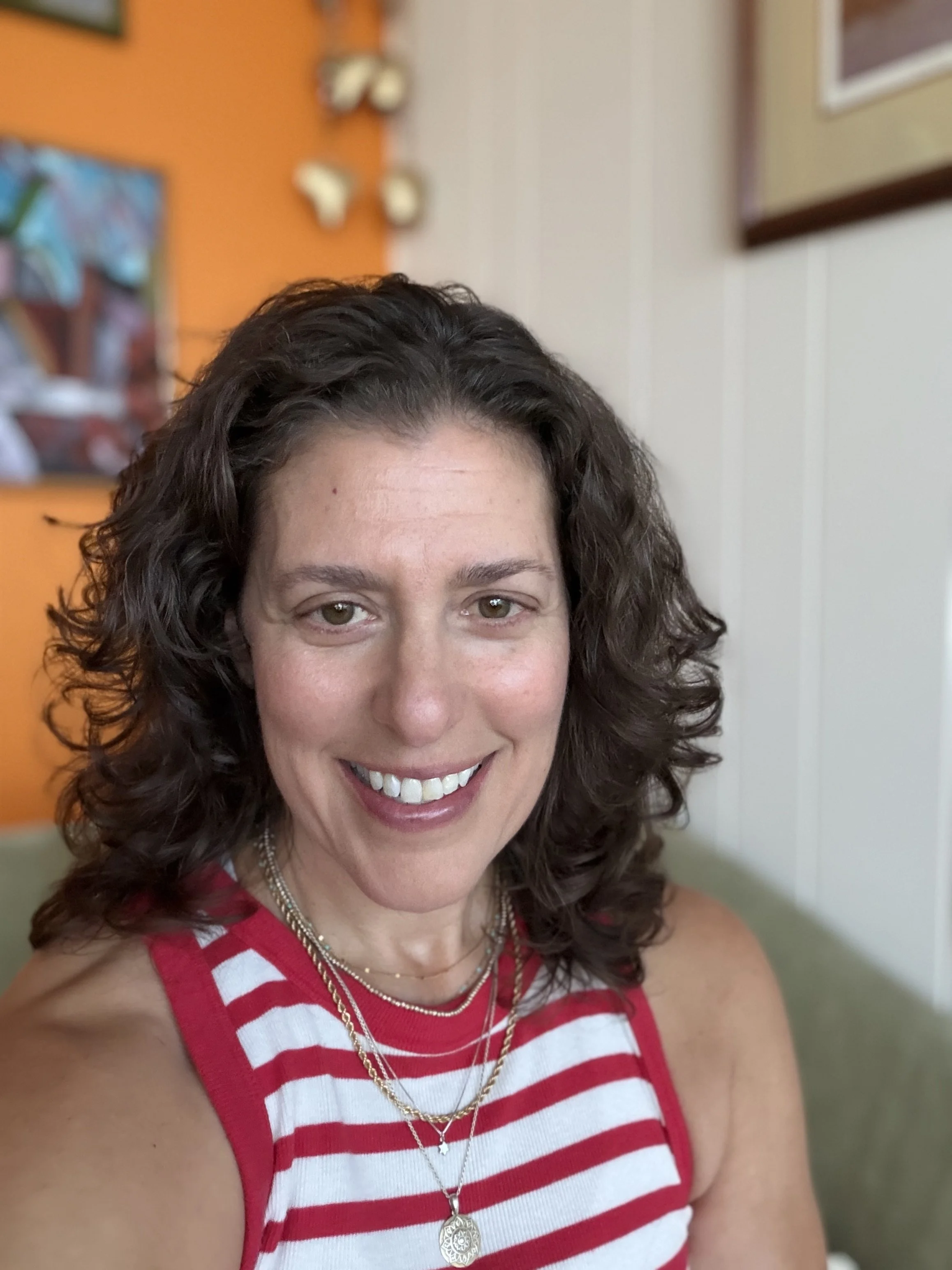
About Sari
Sari Glazebrook, LCSW, is a licensed clinical social worker and founder of Hopeful Heart with more than 15 years of experience helping adults heal from trauma, anxiety, chronic stress, and longstanding patterns that keep them feeling stuck. She specializes in trauma-informed therapy and integrates EMDR, attachment theory, nervous system regulation, brain science, and holistic approaches to help clients better understand themselves, build internal safety, and create meaningful change.
At Hopeful Heart, Sari's work is grounded in the belief that the patterns that once helped us survive deserve compassion—and that with awareness, safety, practice, and support, we can develop the flexibility to live differently.
https://www.hopefulheartllc.com/services
https://www.hopefulheartllc.com/intensive
Hopeful Heart
540 Frontage Rd., Suite 3215
Northfield, IL. 60093