
Learning to Trust Yourself Again After Trauma

Trust after trauma
Building Self-Trust After Trauma
Trauma can make it difficult to trust your emotions, instincts, decisions, and perceptions. Many survivors find themselves second-guessing their choices, seeking reassurance, people-pleasing, or feeling disconnected from their intuition. These patterns are not signs of weakness—they are often natural adaptations to experiences that disrupted emotional safety and nervous system regulation. Through trauma therapy, emotional processing, self-compassion, boundary work, and nervous system healing, it is possible to rebuild self-trust and reconnect with your authentic self.
Why Trauma Can Make It Hard to Trust Yourself
Many people enter therapy believing their primary struggle is anxiety, relationship difficulties, or emotional overwhelm.
As healing unfolds, they often discover something deeper underneath these challenges: a profound difficulty trusting themselves.
If you've experienced trauma, emotionally unsafe relationships, chronic criticism, emotional neglect, betrayal, or prolonged stress, you may frequently question your own judgment, emotions, or instincts.
You may find yourself wondering:
"Am I overreacting?"
"What if I make the wrong decision?"
"Can I trust my feelings?"
"Maybe I'm being too sensitive."
"Why do I always need reassurance?"
These experiences are incredibly common in trauma recovery.
Many survivors become disconnected from their internal sense of knowing because trauma teaches the nervous system to prioritize survival over self-connection.
The good news is that self-trust can be rebuilt.
How Trauma Disrupts Self-Trust
Trauma affects far more than memories.
It impacts how we relate to ourselves.
When difficult experiences occur—especially during childhood or within important relationships—the nervous system adapts to help us survive.
In emotionally unsafe environments, trusting yourself may not have felt possible.
You may have learned:
To ignore your instincts.
To suppress your emotions.
To prioritize other people's needs.
To question your perceptions.
To stay hyperaware of other people's reactions.
Over time, these adaptations can disconnect you from your own inner guidance system.
Many trauma survivors learn to rely on external validation rather than internal wisdom.
Instead of asking:
"What feels right for me?"
They learn to ask:
"What will keep me safe?"
When the nervous system remains stuck in patterns of hypervigilance, anxiety, or self-protection, it becomes difficult to feel confident in your decisions.
This is not because something is wrong with you.
It is because your nervous system learned to protect you in the best way it knew how.
Common Signs of Low Self-Trust After Trauma
The impact of disrupted self-trust often appears in subtle ways throughout daily life and relationships.
Chronic Second-Guessing
You make a decision and immediately question whether it was the right one.
Even simple choices can feel overwhelming because you're afraid of making a mistake.
Seeking Constant Reassurance
You frequently ask others for validation before making decisions or expressing your feelings.
While reassurance may provide temporary relief, the self-doubt often returns quickly.
Difficulty Trusting Your Emotions
You may dismiss or minimize your feelings, wondering whether your reactions are justified.
Many trauma survivors have learned to distrust their emotional experiences.
Ignoring Intuition
You sense that something feels off but convince yourself you're imagining it.
Over time, repeated self-doubt can weaken your connection to your instincts.
People-Pleasing and Self-Abandonment
You prioritize other people's needs while ignoring your own.
You may worry that honoring your needs will lead to conflict, rejection, or disappointment.
Fear of Making Decisions
You avoid choices because you're afraid of making the wrong one.
This can create feelings of paralysis and overwhelm.
Staying in Unhealthy Relationships
You may notice red flags but struggle to trust your own perceptions enough to take action.
Harsh Self-Criticism
An internal voice may constantly evaluate, judge, or criticize your choices and behaviors.
Over time, this can erode confidence and reinforce self-doubt.
How Therapy Helps You Rebuild Self-Trust
Healing from trauma involves much more than increasing confidence.
It involves rebuilding a relationship with yourself.
Trauma therapy creates opportunities to reconnect with your emotions, your body, your values, and your internal sense of safety.
Nervous System Regulation
When the nervous system feels unsafe, self-trust becomes difficult.
Therapy helps clients understand their stress responses and develop tools for regulation.
As the nervous system becomes more regulated, clarity and confidence often increase.
Emotional Processing
Many survivors carry emotions that were never fully acknowledged, validated, or processed.
Therapy provides a safe space to explore and integrate these experiences.
Developing Self-Compassion
Healing involves learning to respond to yourself with kindness rather than criticism.
Self-compassion helps create the emotional safety necessary for self-trust to grow.
Strengthening Boundaries
Boundary work teaches you that your needs, limits, and feelings matter.
Every healthy boundary reinforces trust in your own experiences.
Reconnecting With Your Inner Voice
Trauma often creates distance from intuition and inner wisdom.
Therapy helps clients distinguish between fear-based reactions and authentic inner knowing.
Over time, many people discover that their intuition never disappeared—it simply became buried beneath survival strategies.
Creating Internal Safety
One of the most powerful outcomes of trauma recovery is learning that you can become a safe place for yourself.
As internal safety grows, self-trust naturally follows.
Healing Is About Reconnection
Rebuilding self-trust does not mean becoming fearless or never doubting yourself again.
It means developing confidence that you can listen to yourself, care for yourself, and navigate life's challenges with greater clarity and self-compassion.
Healing is not about becoming someone new.
It is about reconnecting with the parts of yourself that trauma may have taught you to ignore.
The same nervous system that learned to survive can learn to feel safe again.
And as safety grows, so does trust.
You Deserve to Trust Yourself Again
If trauma has left you feeling disconnected from your instincts, uncertain of your decisions, or constantly questioning yourself, know that these experiences are common responses to difficult circumstances.
You are not broken.
You adapted.
And healing is possible.
Through trauma therapy, nervous system regulation, emotional healing, self-compassion, and boundary work, it is possible to rebuild self-trust and reconnect with a deeper sense of confidence and inner safety.
If you are struggling to trust yourself after trauma, consider exploring therapy support. You do not have to navigate this journey alone. With the right support, healing can help you reconnect with your voice, your intuition, and the resilient parts of yourself that have been there all along.
About the Author
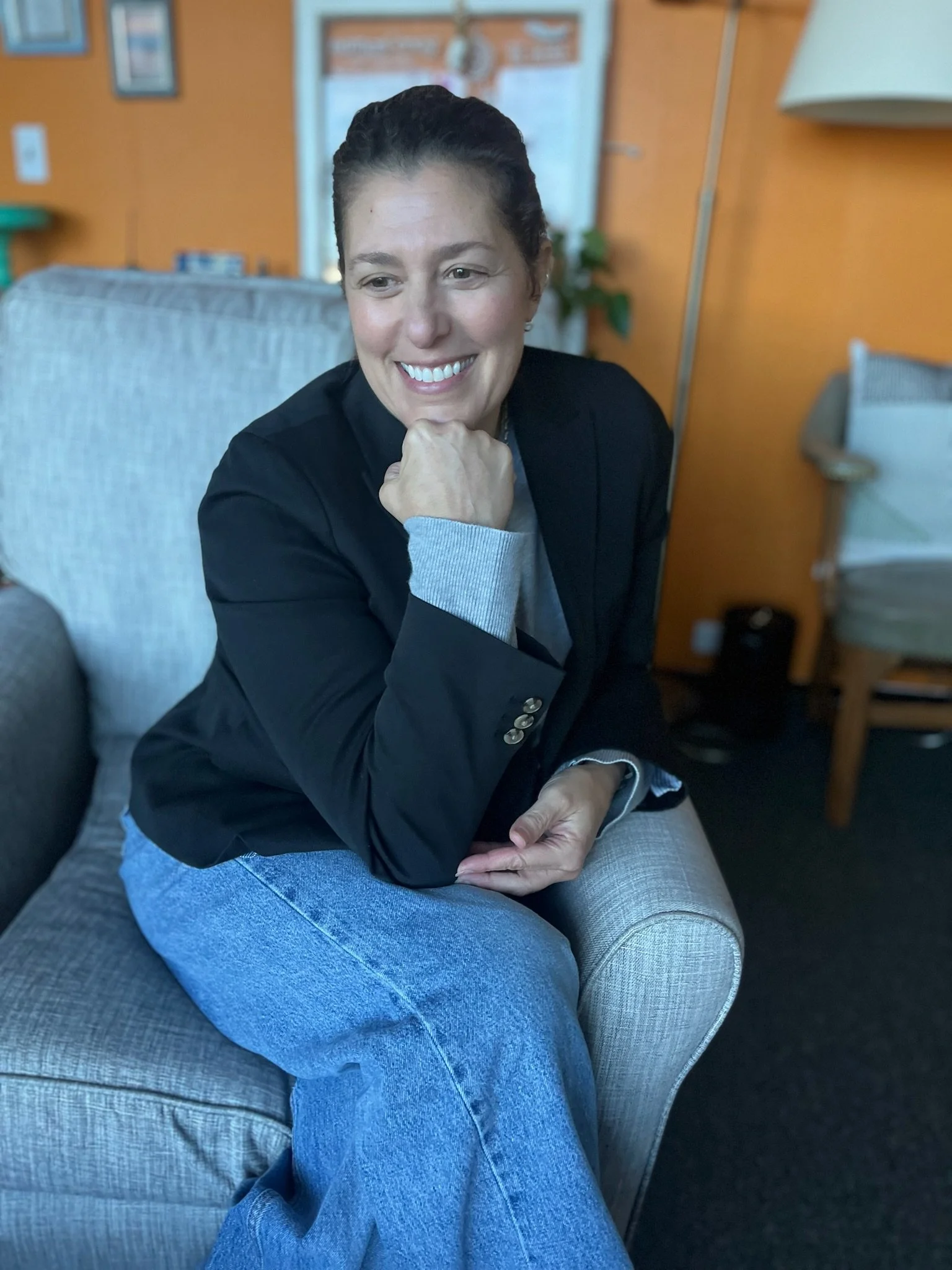
Sari Glazebrook, LCSW is a licensed therapist with over 15 years of experience supporting clients in Northfield, Illinois. She specializes in trauma recovery, anxiety, attachment wounds, burnout, EMDR therapy, and nervous system regulation. Sari uses evidence-based approaches including EMDR, attachment-focused therapy, and trauma-informed care to help clients heal from trauma, strengthen self-trust, improve relationships, and create lasting emotional wellbeing. At Hopeful Heart LLC, she is committed to providing compassionate, expert care both in-person and online for clients across Illinois and Arizona.
ABOUT THE AUTHOR
Sari Glazebrook LCSW is a licensed clinical social worker providing in person psychotherapy in Northfield, IL and North Suburban Chicago with virtual sessions available across Illinois and Wisconsin. She specializes in trauma therapy and therapy intensives, integrating EMDR and somatic approaches to help clients process deeply, regulate effectively, and create lasting change. At Hopeful Heart, Sari provides compassionate, trauma-informed care that fits real life—whether that’s weekly or in therapy intensives.
https://www.hopefulheartllc.com/about-me
https://www.hopefulheartllc.com/
Hopeful Heart LLC
540 Frontage Rd., Suite 3215
Northfield, IL 60093
224-456-8367