
Mental Health Awareness Without Toxic Positivity

You're struggling. Really struggling. And someone — maybe someone who loves you, maybe a wellness post in your feed — tells you to focus on the good. To choose joy. To remember that others have it worse. To look on the bright side.
And somehow, you feel worse.
If that experience is familiar, you're not alone — and you're not ungrateful or negative for feeling that way. Sometimes the messages meant to support mental health can leave us feeling more invisible than before. This post is for anyone who has ever felt like their real, complicated, painful experience didn't quite fit the inspiration quote.
What Is Toxic Positivity?
Toxic positivity isn't about positivity itself — warmth, hope, and encouragement genuinely matter. It's about the pressure to stay positive regardless of circumstances. It's the cultural message, sometimes spoken and sometimes implied, that negative emotions are problems to be solved rather than experiences to be felt.
It shows up in phrases like:
"Everything happens for a reason."
"Just be grateful for what you have."
"Good vibes only."
"You've got this — stay positive!"
"Other people have it so much worse."
These phrases are rarely said with bad intentions. But what they communicate, underneath the optimism, is this: your pain is inconvenient. Please reframe it. And when someone is genuinely suffering — grieving a loss, navigating trauma, living with depression or anxiety — being handed a reframe instead of a witness can feel profoundly isolating.
Mental health awareness, at its best, makes space for the full truth of human experience. At its worst, it wraps suffering in a bow and calls it self-care.
How Toxic Positivity Impacts Mental Health
There's real harm in the habit of rushing past difficult emotions.
When we receive the message — over and over — that certain feelings are wrong, too much, or best replaced with a better attitude, we don't stop feeling those things. We learn to hide them. We learn to manage the presentation of our inner lives rather than actually tending to them. We smile and say "I'm fine" because the alternative feels like a burden, or a failure, or proof that we're not trying hard enough.
This is emotional suppression — and research consistently links it to worse mental health outcomes, not better ones. Suppressing emotions doesn't make them disappear. It drives them underground, where they continue to shape our behavior, our relationships, and our bodies, often without our awareness.
There's also the layer of shame. When someone is struggling with depression and hears "just think positive," the implicit message is that they're doing something wrong. That their suffering is a mindset problem. That if they were stronger, more grateful, more spiritually evolved — they wouldn't feel this way. That shame doesn't motivate healing. It makes it harder to ask for help.
And for those carrying trauma, toxic positivity can be particularly damaging. Trauma isn't a mindset. It lives in the nervous system, in the body, in the way a person moves through ordinary moments. Telling someone with trauma to "look on the bright side" isn't just unhelpful — it can communicate that their experience isn't real, isn't valid, isn't worthy of serious care.
Emotional validation isn't a luxury. It's foundational to genuine mental health support. When we don't receive it, we learn to distrust our own inner experience — and that disconnect makes healing significantly harder.
What Real Support Looks Like
Real support — the kind that actually helps — doesn't begin with a reframe. It begins with presence.
It sounds like: "That sounds incredibly hard." Not: "But at least..."
It sounds like: "I'm here. Tell me more." Not: "Have you tried gratitude journaling?"
Genuine mental health awareness means understanding that emotions — all of them, including grief, rage, despair, numbness, and fear — are not symptoms of a broken mind. They are signals. They are information. They are part of being human. And they deserve to be met with honesty and care, not optimism deployed as a deflection.
Trauma-informed care is built on this understanding. It recognizes that people's emotional responses make sense in the context of what they've lived through. It doesn't rush toward fixing. It creates emotional safety — the experience of being with another person and knowing that your full truth is welcome here, that nothing you feel will be too much, that you won't be managed or minimized.
That kind of safety is what allows real healing to happen. Not because difficult feelings are then transformed into positive ones, but because they are finally, fully felt — witnessed by another person and integrated rather than suppressed.
This is also what therapy support offers at its best: not a space where you're taught to think more positively, but a space where you're invited to be exactly where you are. A skilled, trauma-informed therapist doesn't flinch at your anger or rush your grief. They sit with you in it. And in that sitting, something shifts — not because the pain was erased, but because you no longer had to carry it alone.
That's not toxic positivity. That's genuine healing.
Not Every Feeling Needs a Silver Lining
Some things are simply hard. Some losses don't have lessons. Some grief doesn't resolve into gratitude. Some pain is real and significant and not a stepping stone to anything — it's just pain, and it deserves to be honored as such.
Giving yourself permission to feel what you actually feel, without rushing toward the bright side, is not pessimism. It's emotional honesty. And emotional honesty is one of the most courageous and health-promoting things a person can practice.
You are allowed to be having a hard time. You are allowed to say so. You are allowed to want support that meets you there — not support that asks you to pretend you're somewhere else.
You Deserve a Space That Holds the Whole Truth
If you've been searching for support that doesn't ask you to minimize what you're going through — you've come to the right place.
Therapy isn't about being coached into a better attitude. At its heart, it's about creating a relationship where your full emotional experience is welcomed, witnessed, and taken seriously. Where difficult feelings are met with curiosity rather than correction. Where you can be honest about what's actually happening inside you, without fear of being told to reframe it.
If you're ready for that kind of space — real, grounded, trauma-informed care that honors who you are and what you've been through — we'd love to connect.
Reach out today to learn more about therapy support designed to meet you exactly where you are. No toxic positivity required.
→ Schedule a free consultation at hopefulheartllc.com
Keywords: mental health awareness, emotional validation, therapy support, trauma-informed care, emotional safety, toxic positivity, mental health support
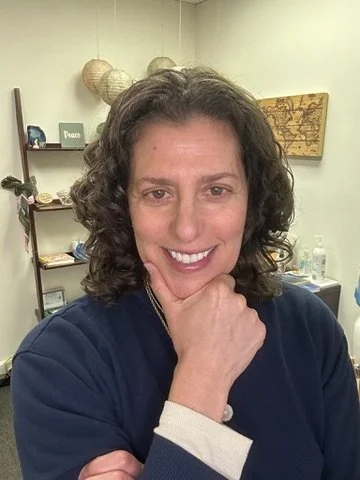
ABOUT THE AUTHOR
Sari Glazebrook LCSW is a licensed clinical social worker providing in person psychotherapy in Northfield, IL with virtual sessions available across Illinois and Wisconsin. She specializes in trauma therapy and therapy intensives, integrating EMDR and somatic approaches to help clients process deeply, regulate effectively, and create lasting change.
At Hopeful Heart, Sari provides compassionate, trauma-informed care that fits real life—whether that’s weekly or in therapy intensives.work.
https://www.hopefulheartllc.com/about-me
https://www.hopefulheartllc.com/
Hopeful Heart LLC
540 Frontage Rd
Suite 3215,
Northfield, IL 60093
224-456-8367